Per-GB pricing on logs nobody acts on
Successful logins, routine DNS, benign CloudTrail calls, bulk EDR telemetry. Event types your analysts have never alerted on, ingested at full SIEM price every day.
Fleak normalizes, filters, and routes every log to the SIEM, data lake, or archive where it earns its keep. SOC spend down 30–50%. Schema drift repaired in minutes, not sprints.
TRUSTED BY


Successful logins, routine DNS, benign CloudTrail calls, bulk EDR telemetry. Event types your analysts have never alerted on, ingested at full SIEM price every day.
280 sources means 280 schemas and 280 detection variations. A vendor renames one field, a rule breaks, and detection engineers patch pipelines instead of hunting threats.
Drop sources to stay on budget and accept the blind spots. Or pay the full bill and lose the argument with finance next quarter. Raw, unrouted data forces the choice.
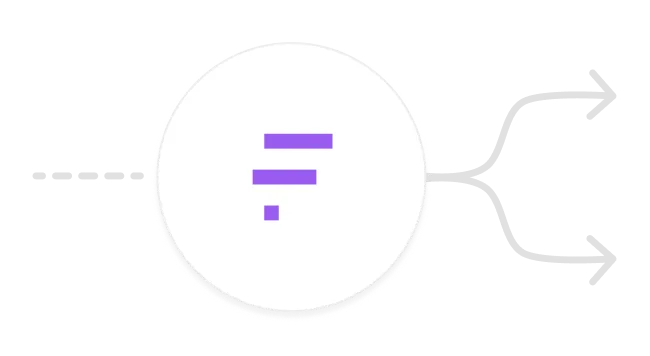
Fleak evaluates every event type against what each downstream tool needs, then routes it. Real-time correlation goes to the SIEM. Hunt corpora go to your data lake at object-storage prices. Compliance logs go to the archive. Noise goes nowhere.
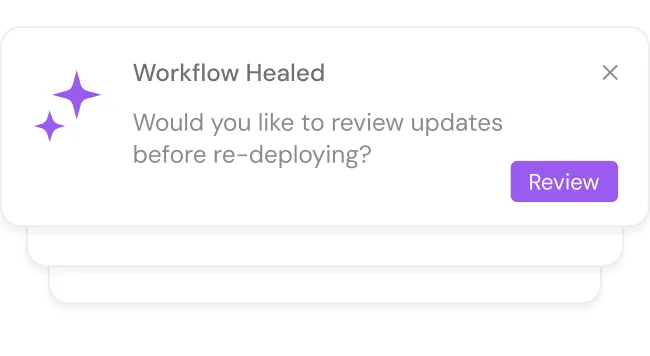
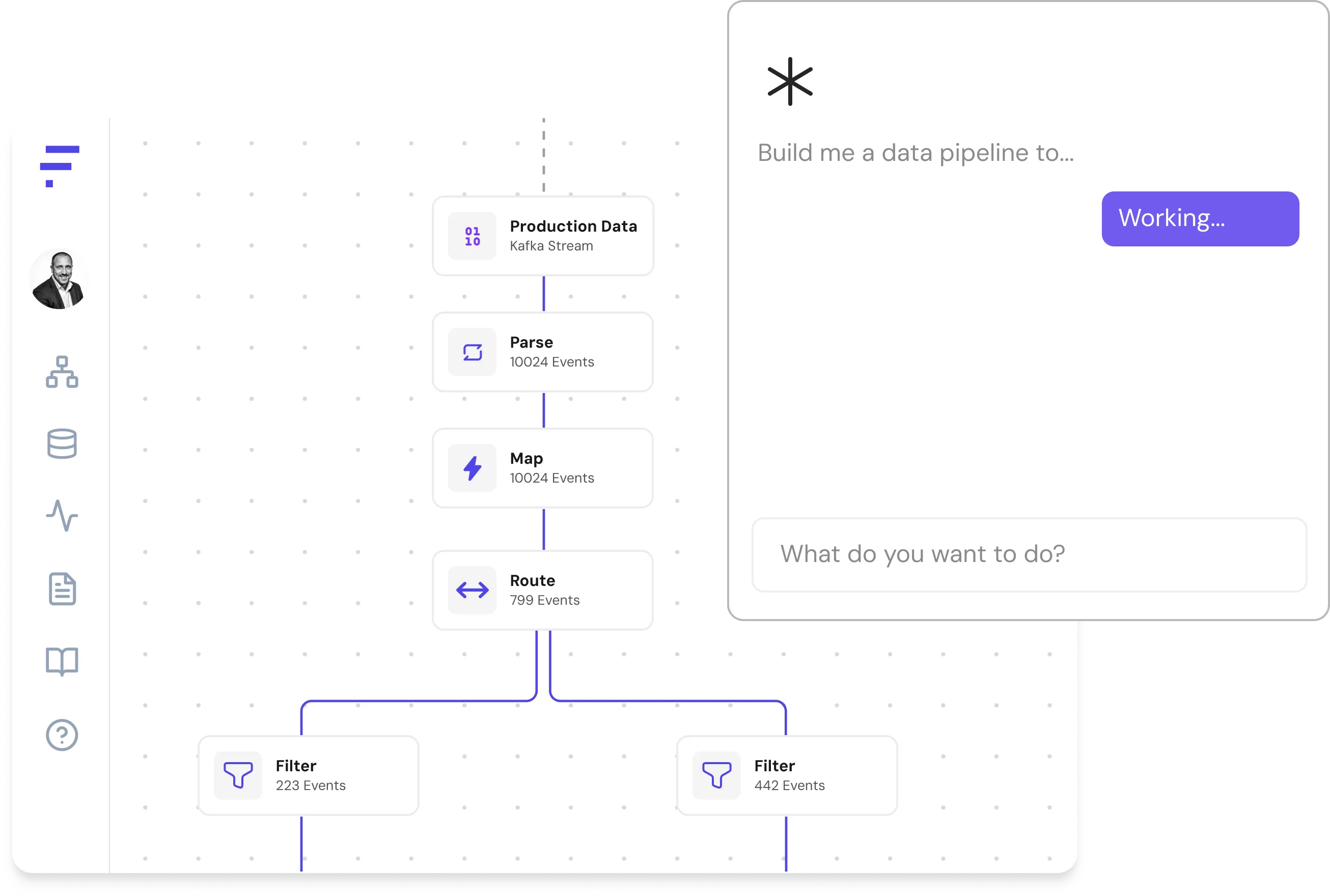
Describe the pipeline in plain English and Fleak's copilot builds it. When an upstream schema changes, Fleak detects the drift, generates the corrected config, and redeploys. Human review optional.
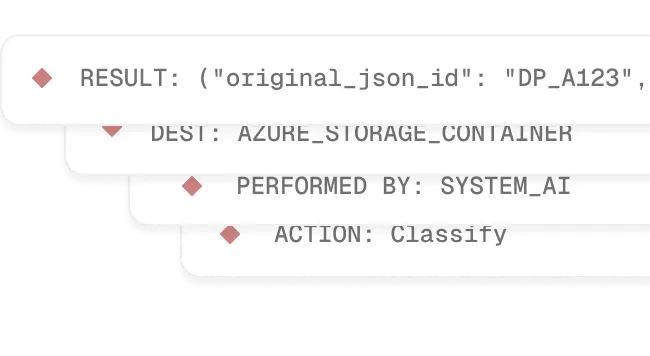
Managed SaaS, your cloud, on-premise, or air-gapped. Fine-grained access control at the data layer, every transformation logged, and production data never touches an AI model.
→ SOC 2 TYPE II · FULL AUDIT TRAIL
60–80%
SIEM ingest reduction
signal-worthy event types only
30–50%
SOC spend reduction
every log routed to where its job gets done
6mo → 1wk
Time to first source live
vs. hand-built pipelines
3 Minutes
Avg. self-heal time
when schema drift is detected
Millions
Events per second, real time
zero storage required
90%
Integration cost reduction
no custom parsers, no per-connector fees
EDR, identity, cloud audit, network, SaaS, OT — if it emits logs, Fleak connects to it. No hand-written parsers. No six-month onboarding.
Say what you want in plain English — failed logons to Sentinel, the rest to the lake. Fleak's copilot builds the pipeline in minutes.
Every log normalized to OCSF, UDM, or your own schema, then routed by what each destination needs. When a source changes, Fleak repairs the pipeline itself.
Detections to the SIEM. Hunt data to your lake. Compliance logs to the vault. Streamed in real time — Fleak stores nothing.
A vendor renames a field. A new agent version changes the log format. Fleak detects the drift, generates the corrected config, and alerts you. Approve and redeploy — no parser rewrite, no on-call incident. Average time to heal: three minutes.
Fleak sits in front of your SIEM, not in place of it. It connects your sources, normalizes every log to OCSF (or your own schema), and routes each one to the SIEM, your data lake, or an archive. Your SIEM keeps doing detection — on less data, in one schema.
Yes. Only event types that need real-time correlation reach the SIEM at hot-path prices. High-volume telemetry lands in your own data lake at object-storage prices, and compliance logs go to an archive. Customers see SIEM ingest down 60–80% and SOC spend down 30–50%, with no drop in coverage.
Rules-based pipelines filter by count and pattern, and they break when a schema changes — someone gets paged and rewrites the parser. Fleak routes by what each downstream tool needs, and when a source changes it detects the drift, generates the corrected config, and redeploys. Average time to heal is three minutes.
The catalog covers the security stack — Splunk, Microsoft Sentinel, Palo Alto XSIAM, CrowdStrike Falcon, Google Chronicle, Okta, AWS CloudTrail, Azure Monitor, Google Cloud Logging, Datadog, Kafka — plus lake and warehouse destinations including Databricks, Snowflake, Amazon S3, BigQuery, Elasticsearch, and ClickHouse. Industrial OT and aviation sources are listed alongside them.
View all integrations →Fleak runs as managed SaaS, in your cloud, on-premise, or air-gapped. Brain plans, Muscle executes: the AI reads schemas and writes the pipeline config, and a deterministic engine runs it. Production data never touches an AI model, every transformation is logged, and Fleak stores none of your data.
Book a 30-minute working session and bring your noisiest log source. We connect it live, normalize it, and show where each event type belongs — and what it stops costing your SIEM. The docs are public if you would rather read first.
Read the docs →30 minutes. Bring your noisiest log source and your SIEM renewal quote.